Choosing a reinforced silicone hose is not a styling decision. It is a fit, temperature, pressure, and durability decision. Colin Chapman, the racing-car designer, is often credited with the line, “Adding power makes you faster on the straights. Subtracting weight makes you faster everywhere.” That principle reminds buyers to consider the complete system, not just a shiny hose.
How to choose reinforced silicone hoses for performance cars? Start by measuring the existing hose’s inside diameter, length, bend radius, and connection points. Check the engine bay after it reaches operating temperature. A hose that clears a cold engine may rub against a bracket once everything moves and expands. Match the hose’s temperature and pressure ratings to the actual application, and confirm compatibility with coolant, oil mist, or other fluids it may encounter. Reinforcement layers matter, too: they help resist pressure and deformation, but cannot correct poor fitment.
Look closely at the details. Smooth inner walls, even reinforcement, cleanly formed bends, and secure clamps are useful signs. Ask the supplier for test data and clear specifications; a product photo proves very little. Chapman’s famous quote concerns vehicle design, not silicone-hose engineering, so it should not replace technical evidence. That distinction matters.
There is no universal best hose. This guide will compare material quality, construction, routing, and installation checks to help performance-car owners make a better-informed choice. One limitation is easy to miss: without measuring your specific engine bay, even good advice stays general. Measure twice. Check again after installation.
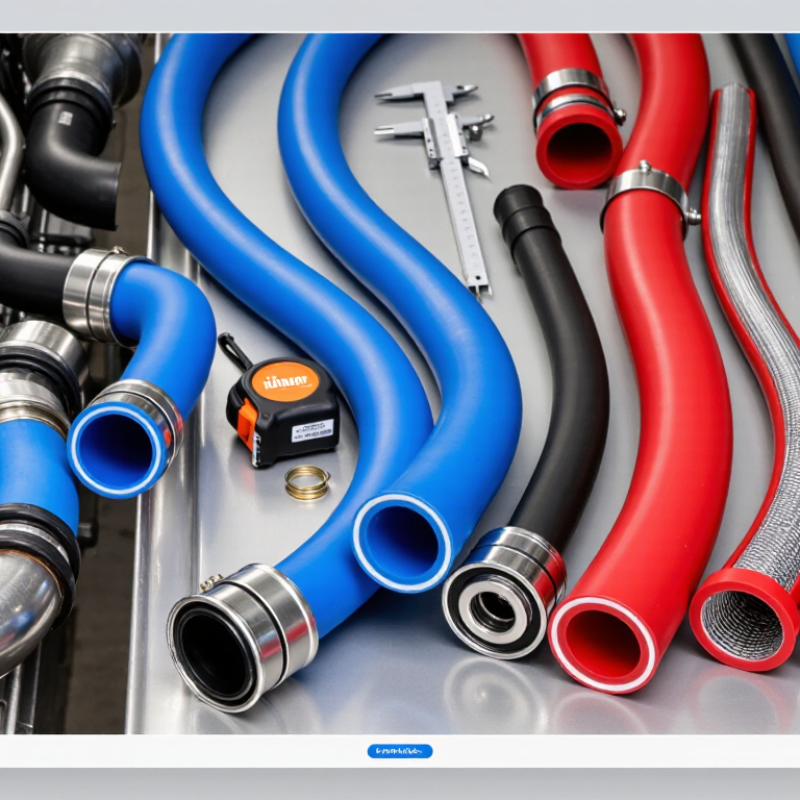
Choosing reinforced silicone hoses for a performance car starts with accurate temperature planning. I begin by mapping heat sources around the engine bay. Record ambient temperature, coolant temperature, intake temperature, and exhaust-side radiant heat.
Typical silicone ratings span −50°C to 200°C. However, that range describes material capability, not ideal continuous operation.
Turbocharged engines can create sharp temperature spikes after hard acceleration.
Peak temperature matters.
During road testing, place temperature sensors near bends, clamps, and nearby exhaust components. Readings near the engine often differ from readings inside the hose. A hose may tolerate 200°C briefly but soften during prolonged heat soak.
I once selected a hose using only the coolant gauge. That decision looked reasonable. Real-world heat soak proved otherwise. Now I allow extra thermal margin and inspect the hose after repeated hot runs.
Reinforcement also affects performance under pressure and vibration. Choose construction suitable for the intended coolant, air, or charge-air system. Check whether the hose remains flexible at low temperatures.
A stiff hose can crack around a tight bend during winter starts.
Inspect for swelling, surface blisters, discoloration, and clamp movement. These details provide practical evidence beyond a specification sheet.
Temperature judgment is not perfect, especially when sensors miss radiant heat. Recheck measurements after installation, because nearby hardware can change the local environment.
Match the hose’s inner diameter to the manufacturer’s port size. Measure thermostat housings, radiators, and expansion tanks with calipers. Measure twice.
A 10% smaller inner diameter cuts flow area by roughly 19%. That can increase coolant velocity and pressure loss.
No. It may fit poorly, seal badly, or kink near a tight bend. Bigger is not automatically better.
Check the port size, bend radius, clamp fit, and engine position. A hose that fits while the engine is raised may rub when installed normally.
No. Reinforcement can help resist pressure and collapse, but it cannot fix the wrong diameter or a poor bend.
Consult the vehicle service manual or cooling-system test data. Pressure and temperature observations can help, but they are rough clues.
No. Check documented material compatibility and applicable hose specifications. Appearance and flexibility are not proof. Looks can mislead.
Confirm its stated compatibility with the intended fuel and blend. Check the inner liner, pressure rating, bend radius, and clamp area.
Treat its suitability as unverified. I would not assume compatibility from a generic performance description; that assumption is easy to regret.
How to choose reinforced silicone hoses for performance cars? Begin by defining the hose’s operating environment, including normal and peak temperatures. Many silicone hoses are rated across a broad range, commonly from about −50°C to 200°C, but the selected product must suit the vehicle’s actual cooling conditions. For coolant applications, confirm that the hose design meets the relevant SAE J20 requirements, then select an internal diameter that matches the original equipment port size and supports the required coolant flow without creating unnecessary restriction.
Reinforcement is equally important. Compare the number of reinforcement plies with the manufacturer’s published pressure and temperature ratings, especially when the cooling system operates under high load. Finally, check fluid compatibility rather than assuming all silicone materials are suitable for every application. Fuel-related service should follow SAE J30 requirements and use hose materials specifically designed for fuel exposure. Careful attention to temperature, standards, sizing, reinforcement, and fluid compatibility helps ensure dependable performance and a properly matched installation.

 Autowellix Autoparts